
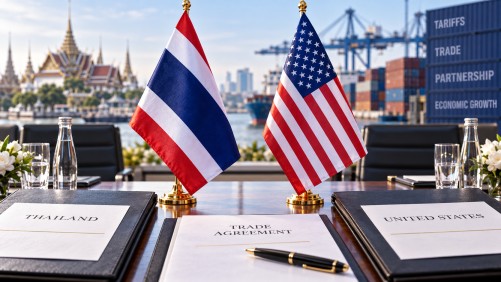
As global trade dynamics continue to evolve, Thailand is taking proactive steps to secure its economic interests on the international stage. The Southeast Asian nation is intensifying its efforts to negotiate a reciprocal trade agreement with the United States. This move is aimed at shielding Thai exporters from the prospect of steeper tariffs that could arise under current US trade policies.
The discussions, centered around the Agreement on Reciprocal Trade (ART), are ongoing, with no definitive timeline for completion. Prime Minister Anutin Charnvirakul is set to engage with US President Donald Trump on these trade negotiations, particularly focusing on the conditions surrounding tariffs. Currently, Thai exports face a 12.5% tariff under a Section 301 measure targeting imports linked to forced labor practices.
Further complicating the trade landscape is a separate US investigation, initiated in March 2026, which scrutinizes excess production capacity in Thailand and other major economies. This inquiry could potentially lead to additional duties on Thai goods. In response, Thai officials have provided data contesting the US assessment, arguing that actual production capacities in key sectors surpass US estimates. They are advocating for a reassessment to better reflect current realities.
Thailand’s ambitions with the ART include securing tariff treatment on par with regional counterparts like Malaysia and Indonesia. Such an agreement is seen as a pathway to enhancing market access and offering more predictability for Thai businesses. However, the specific terms of the final tariff arrangement are still under negotiation.
The prospective trade deal also aims to address US concerns regarding trade barriers and investment opportunities in Thailand. Any finalized agreement would necessitate ratification through Thailand’s domestic legislative processes before it could be implemented. As negotiations progress, the focus remains on achieving a balanced trade relationship that benefits both nations.