
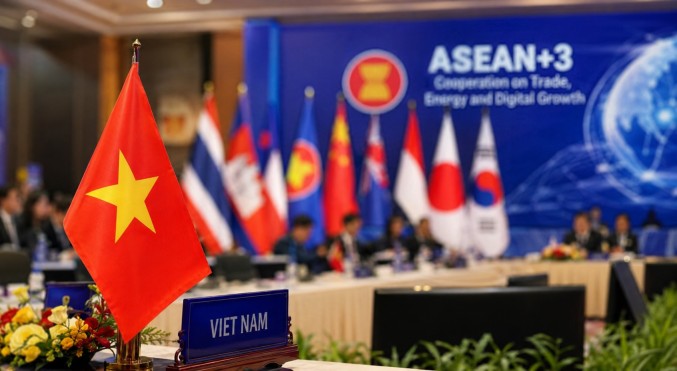
During the ASEAN+3 Foreign Ministers’ Meeting in Manila, Việt Nam urged enhanced economic integration and regional resilience among ASEAN members alongside China, Japan, and South Korea. Foreign Minister Lê Hoài Trung highlighted the need for deeper collaboration in trade, connectivity, and sustainable development. He stressed the importance of implementing regional trade agreements effectively and proposed expanding efforts in areas such as energy security, food security, digital transformation, innovation, and clean energy.
Minister Trung suggested the exploration of regional energy cooperation mechanisms as a way to fortify resilience against future economic and geopolitical challenges. This call for increased cooperation comes amidst a backdrop of global uncertainties that underline the need for cohesive regional strategies. The meeting served as a reminder of the vital role that ASEAN+3 plays as a platform for fostering regional cooperation and stability.
As the discussions unfolded, member countries collectively agreed to expedite the ASEAN+3 Work Plan for 2023–2027, which aims to bolster regional cooperation across various sectors. The foreign ministers voiced their support for advancing financial cooperation, expanding regional food reserves, and promoting renewable energy initiatives. There was also a focus on boosting investments in education, technology, tourism, and cultural exchanges, which are seen as key drivers of regional growth and integration.
China, Japan, and South Korea reaffirmed their commitment to supporting ASEAN’s central role in regional affairs, pledging to continue their assistance in advancing the ASEAN Community Vision 2045. The reaffirmation by these influential nations underscores the importance of ASEAN’s centrality in promoting peace and prosperity in the region, highlighting a shared commitment to collaborative progress.