
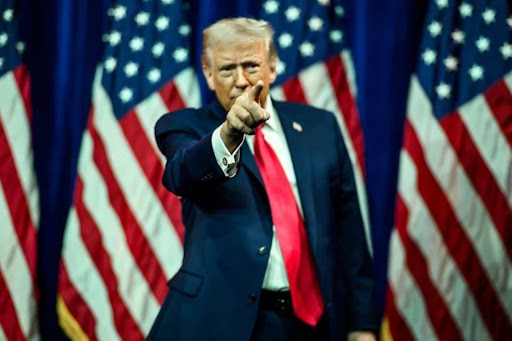
United States President Donald Trump issued a blunt warning to Iran on Thursday, urging its negotiators to get serious about reaching a peace agreement before it becomes too late. Posting on Truth Social, Trump claimed that Iranian representatives were privately pleading for a deal while publicly downplaying their interest in Washington’s proposal. The president’s remarks reflect growing frustration over what he sees as contradictory signals from Tehran.
Trump has repeatedly insisted that a diplomatic resolution is within reach, even as Iran formally rejected a 15-point ceasefire framework put forward by the United States. That proposal includes significant sanctions relief, a dismantling of Iran’s nuclear programme, restrictions on its missile capabilities, and an agreement to keep the Strait of Hormuz open to international shipping. The strait is a critical global artery through which roughly one-fifth of the world’s oil supply passes.
Iran, however, has presented its own counter-terms through state-run television. Tehran’s demands include a halt to attacks on its officials, written guarantees against future military aggression, financial reparations for war damages, and formal recognition of its sovereignty over the Strait of Hormuz. These competing proposals have left the two sides far apart, even as back-channel talks reportedly continue.
The ongoing conflict has extracted a devastating human cost across the region. More than 1,500 people have died in Iran and close to 1,100 in Lebanon, while Israel and other areas have also suffered casualties. Thirteen American service members have been killed, and millions of civilians across Iran and Lebanon have been uprooted from their homes by the violence.
With missile strikes and aerial bombardments continuing despite diplomatic overtures, the path to peace remains deeply uncertain. Trump’s warning that there will be “no turning back” once a critical threshold is crossed adds new urgency to negotiations. The international community is watching closely as both sides weigh the costs of continued conflict against the terms of a potential settlement.